Showing posts with label nature. Show all posts

Monday, 24 June 2013

Walk from the Wyche to the singing Kettle, Malvern Hills, Worcestershire.

I enjoyed a very windy Sunday walk yesterday. It certainly blew away the cobwebs. The plentiful rain we have been experiencing lately means it is very lush and green at the moment. Park at the Wyche church carpark and then walk south along the path furthest away from the church, if you want to follow this walk.

Happy Sheep

Pine cones in the tree canopy

Fox gloves

The pathway
Lovely cows

More lovely cows along the pathway.

Sunday, 26 May 2013

Upton Ham, Upton upon Severn, Worcestershire.

River view
A beautiful sunny day is perfect for a walk along the river. Upton Ham is a site of special scientific interest, it is a wild meadow full of flowers and alive with the buzz of insects and the song of birds. A popular place to go for a walk and to take a picnic.
River Severn

Morris dancers at the Swan pub


On the way back we stopped for a drink at a local pub in Upton town and were delighted to see traditional Morris dancers.


Wild flower meadow

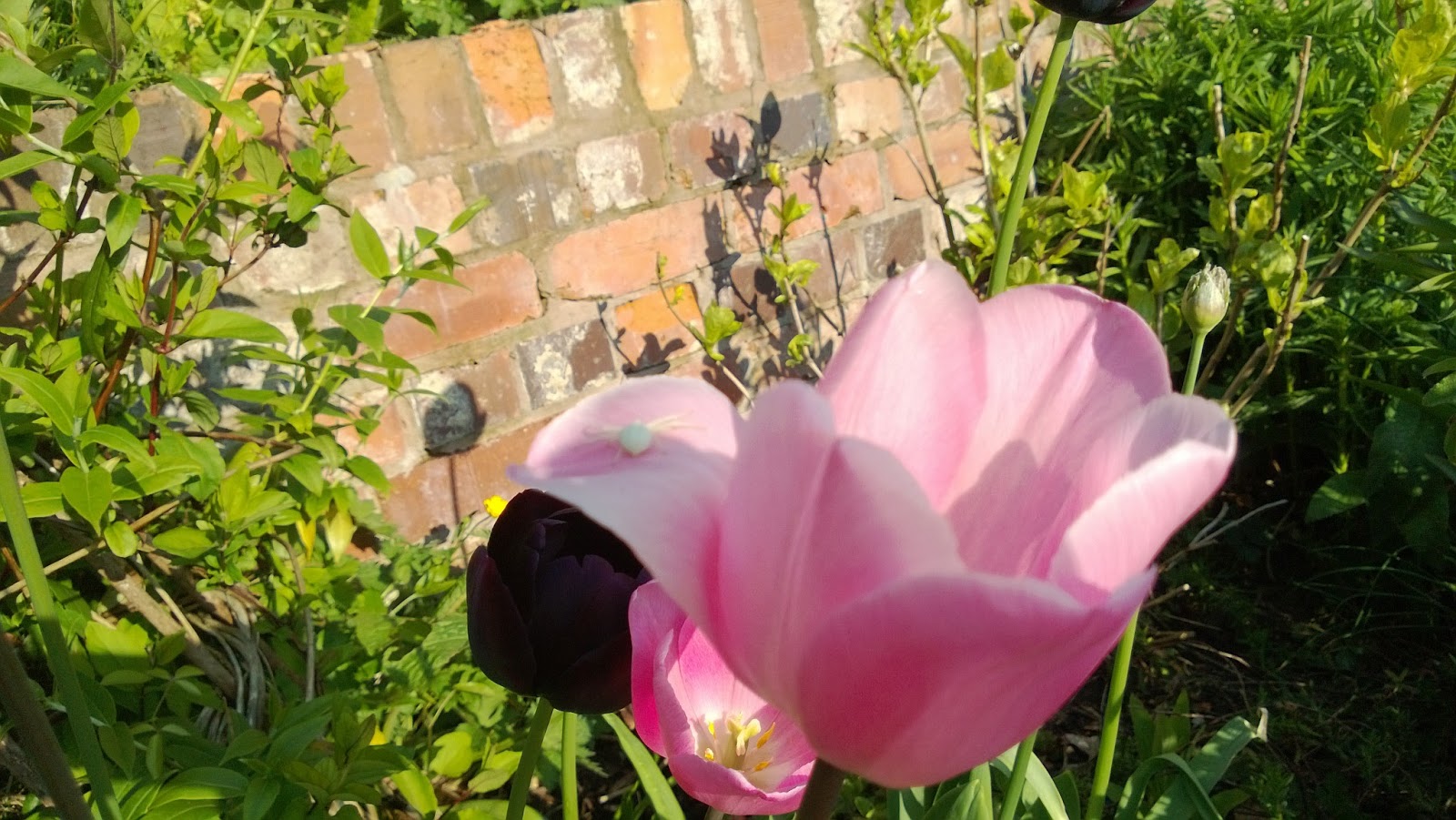
Spider Trap

Gardening today I spotted a spider camouflaged in a tulip. These spiders sit  and wait for another unwary insects, and then spring out and devour them. Native to many countries, until now I had never seen them in my garden before. Incredibly beautiful this one was a nervous model, and after I took the first picture it came out of the flower bell, and stood upon the edge of the bloom waving its long front legs aggressively.

Thursday, 23 May 2013

Beautiful birds of prey

Sparrow hawk

Barn owl
 I love spending as much time as possible outside, walking the hills or just pottering around in my garden. I know the names of quite a lot of the plants I see about the place, the trees, flowers and weeds. I like to think of my self as a country person, but in one area I am sadly lacking knowledge. 


Harris hawk
The common garden birds I know as they have distinctive calls and sit there long enough for me to see their distinctive markings. The big scary birds of prey however are a mystery. I am forever spotting large birds overhead and have no idea what they are. Owls are quite easy as long as they are the barn or tawny varieties. To me all the others look the same. Hawks and kestrels all look alike and just seem like small eagles I guess. 


Golden eagle

I thought I would look up what they look like and see if next time I see them I can work out what they are. Thought you might like to try that too.


Red kite

Kestral

Friday, 17 May 2013

Orchids and Lizards at British Camp, Malvern, Worcestershire.

View of hills to the north of British Camp

Bright yellow fields of rape seed flowers

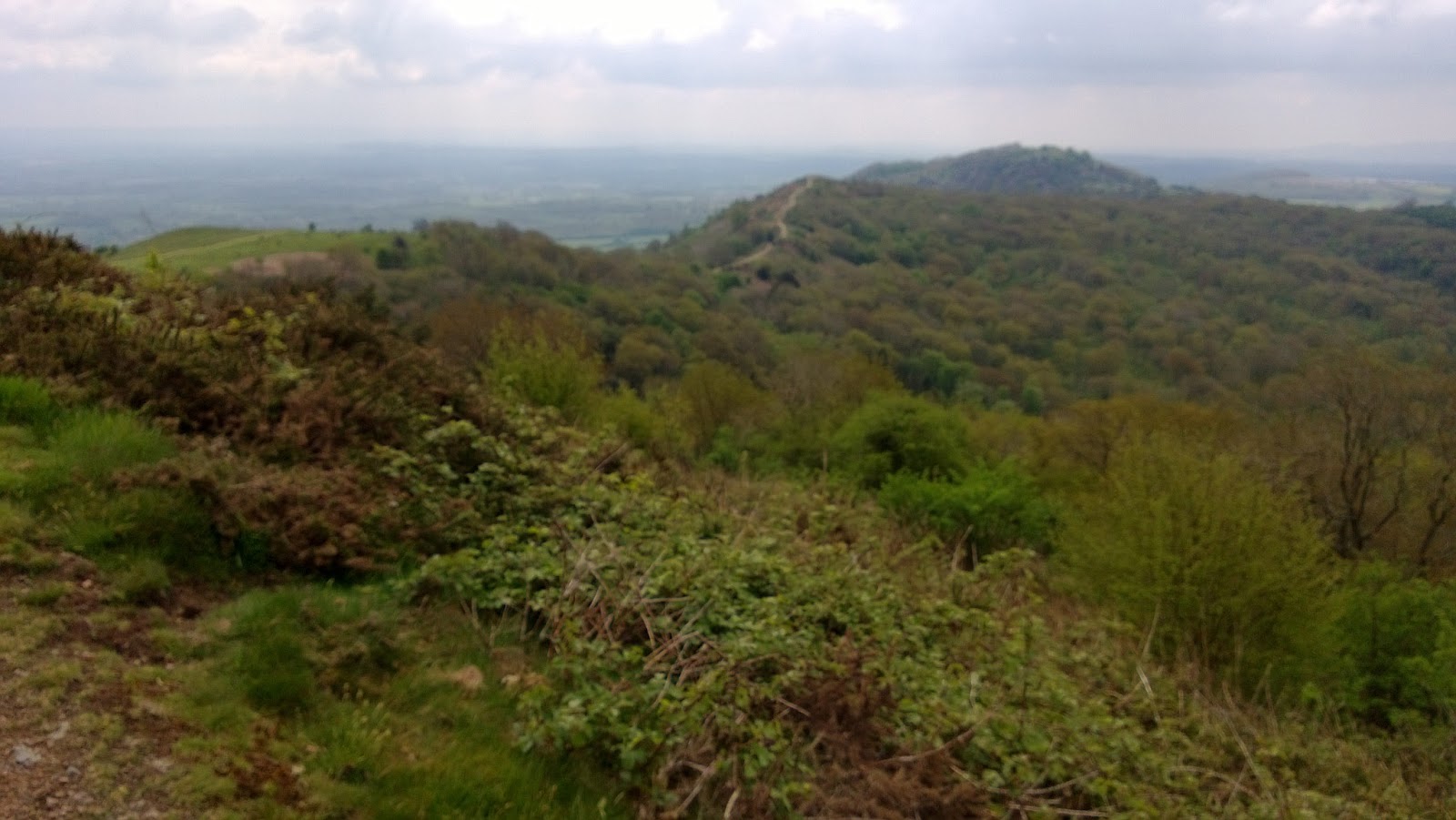
 Today is a cloudy dull day. British camp is still a beautiful place but the subtle beauty revealed by such a day you have to see first hand to appreciate. Either that or I need to get much more expensive photographic equipment. I bought my Nokia lumina expressly because it, at the time, had the best camera of any of the mobile phones, but in these light conditions it loses clarity and sometimes everything fades to dull silhouettes.
Orchid

That said there were a few decent vista shots, and somethings were just so beautiful. I came across a number of yellow orchids. They were only about six cm tall but once you spotted them and stooped down for a closer look they were exquisite.

The wood near the reservoir is carpeted in bluebells, though slightly faded and more subtle in the low light, their beauty could not be diminished.


Little violet flowers
Add to that the wildlife. Swifts and swallows feasting on flies flew overhead in great swooping patterns stunningly over the surface of both the hills and the reservoir. Their flight path undulations matching exactly the undulations of the land a mere three or four cm above the surface. Their speed though again means you need to be there to see it.


Slow worm
A slow worm, which is neither a worm or a snake but actually a legless lizard, I did manage to snap. Being cold blooded it needs to absorb the suns warmth to get itself moving in the morning. On a cloudy day such as this, that takes longer and it was trying its best to sunbathe on one of the paths. I just about managed to sneak up and get a decent shot off before it slithered away into the nearby brambles and vanished. Very rare and quite endangered spotting one is an absolute treat.


Bluebells in the wood near British Camp Reservoir Wood

View to the south of British Camp

Tuesday, 14 May 2013

Spring colours, Malvern, Worcestershire

Primrose in April
Nature is an infinitely more precise designer than man. Mother natures hand considers not only the individual and his niche, but also how he is influenced by. and in turn his influence upon, all other species around him. It is in fact the very differences between each flower species from one another that earns it his niche, (the same of course is true for birds/ seaweeds/ fish / big cats etc).

Forsythia


This is what makes large similarities more curious. Why are all the early spring native flowers, such as aconites, primrose, daffodil, forsythia etc, all yellow ? Why are all the most wild forms of fruit trees in spring, like cherry, plum, gage, apple, pear and hawthorn, have white blossom ? And again why do the vast majority of the second flush of native flowers, anemone, forget-me-not and bluebell all have blue flowers ?

Daffodil wood in April, (Newent)

Forget-me-nots, today by Malvern stocks
My theory is that there are so few pollinating insects about early in the growing season that all the flowers have to appeal to the broad swathe of insects, and it is beneficial to all if they use the same colour to advertise that their pollen is ready.


One of the very few white naturally occurring bluebells
We have deciphered the bee's dance and it communicates not only the distance and direction to the best flowers, but also their colour, to the bees companion's. We know then that insects make a note of the colour of the best flowers,

Later in the year with pollinating insects being far more numerous, flowers can appeal to a specific few insect types and so more varieties of colour can occur.

Bluebells today between Gardiners Quarry and Black Hill Malvern

Sunday, 12 May 2013

Holy Isle, just off the Isle of Arran, Scotland


Looking down holy Isle hill
 Holy Isle, in the Firth of Clyde off the west coast of Scotland is a delightful place to visit for the day. It has a population of about 13 and is just out in Lamlash Bay, Arran. It was the site of a cave and holy well that was home of the 13th century Saint Molaise. 


Looking across to Lamlash
The island is now the home to a Buddhist Community and home tp the Centre for World Peace. The island is also a nature reserve, home to the Eriskay ponies, Saanen goats, Soay sheep and the Arran Whitebeam.


One of the Islands painted stones


The visitors centre
Throughout the summer ferries from Lamlash to the island can be taken from about 10am and the final ferry back is about 4pm. Just enough time to walk over the hill and then back along the sea shore taking in the painted stones of Buddhist Gods.


The low path

Another of the Island painted stones. 

Tuesday, 7 May 2013

Silver linings to rotten luck.


 Rotten wood may not sound very exotic or important. These days we tidy our gardens and every fallen bit of wood gets collected and ends up in the ever fashionable wood burner. But keeping everything looking tidy is to the detriment of our wildlife. 

Many insects including the larval stage of the ever rarer stag beetle, live and eat rotting wood. The stag beetle needs to spend up to four years in a piece of rotten wood to reach its adult stage. 

You may not like insects but they are the main food source for many bird species and for small mammals such as shrews and hedgehog. You would have to be particularly heartless not to like the shrew with his twitchy nose, or the delightful Mrs Tiggywinkle.

Personally I rather like the various moulds and fungus that live on the wood. I have seen some marvellous yellow bracket fungus and some rather strange shiny orange ones. More common are the plain white or brown brackets, but commonest of all around here, and delightful in the early dew or pale sunshine in the dappled woods, are the silvery types such as agaric, schizophylum commune.


Monday, 6 May 2013

Weekend poem

Weekend

A few days in the garden
Trying to get things straight.
My muscles maybe tired,
But things are looking great.
Weeding, planting, raking, mowing,
Pruning, dead-heading, a little hoeing.

Then watering in the evening,
Enjoy the setting sun.
Listening to the bird song,
It seems we all had fun.
Work again tomorrow, daily grind.
But soon will come the weekend, so never mind.


by Izzy Silver.

Sunday, 5 May 2013

Bluebells, Old Hills, Callow End, Worcester.

Okay so the dandylions were lovely too
Today I took my friends to see the bluebell wood. I was thrilled to see how fabulous they looked. The bluebells are all open and such a deep pure blue. If you have time and live close enough it is the place to be. here a just a few pictures of them.


Wednesday, 24 April 2013

British Camp reservoir, Malvern Hills, Worcester,

Deep thoughts

I like to sit and think,
Besides a lake or pool.
Is it the language used,
That makes it seem so true.

To reflect on life where water,
Holds a mirror to our mind.

To see the light there,
Where sun skips on the surface.
To dive our deepest depths,
Where dark weeds drag and drown.
To let our mind view ,
Great vista's and vast horizons.
And finally focus on 
That one distilled answer.


A reflective poem, wirtten beside the reservoir at British Camp, by Izzy.B.Silver