Showing posts with label wildlife. Show all posts

Friday, 17 May 2013

Orchids and Lizards at British Camp, Malvern, Worcestershire.

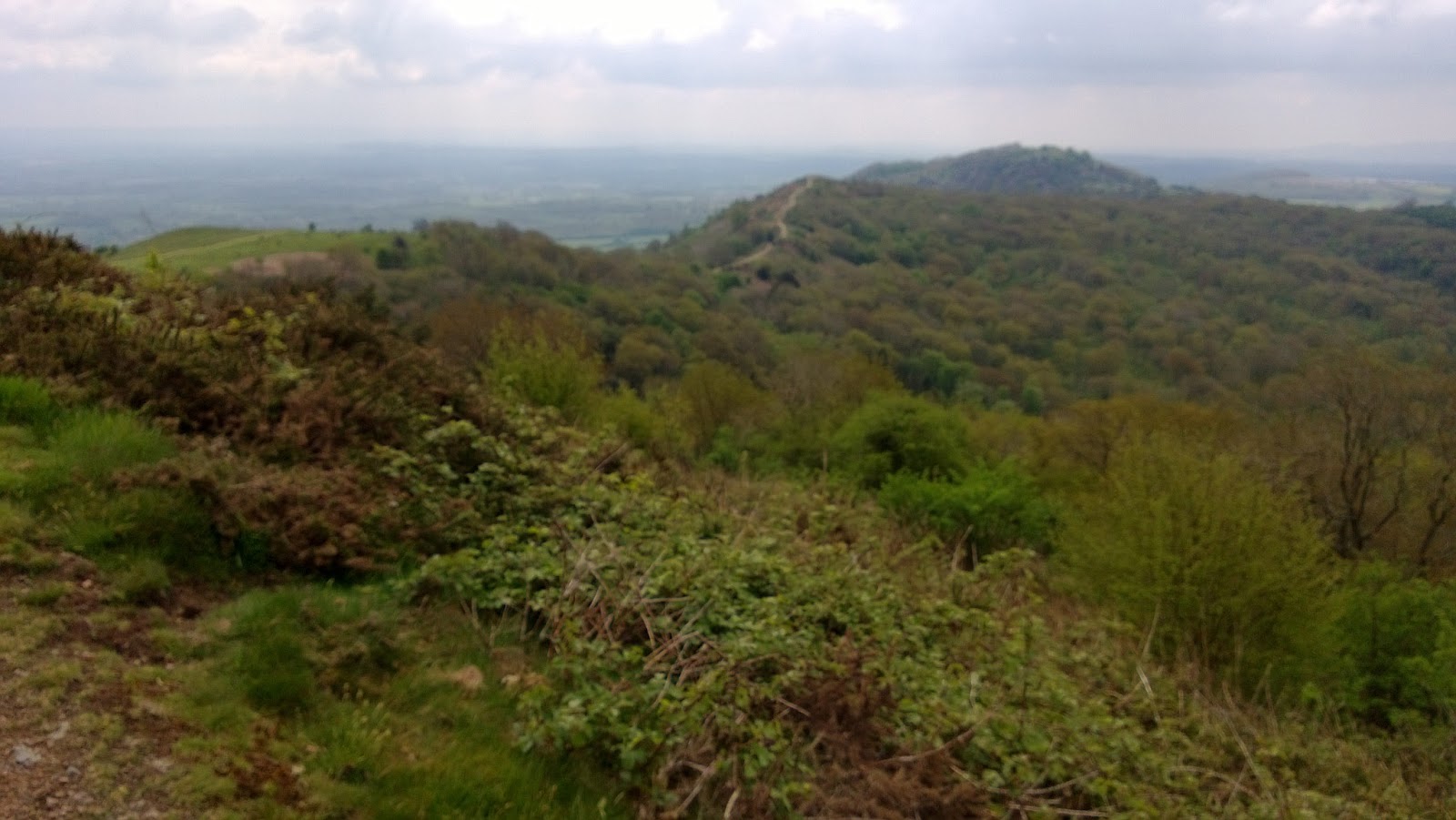
View of hills to the north of British Camp

Bright yellow fields of rape seed flowers

 Today is a cloudy dull day. British camp is still a beautiful place but the subtle beauty revealed by such a day you have to see first hand to appreciate. Either that or I need to get much more expensive photographic equipment. I bought my Nokia lumina expressly because it, at the time, had the best camera of any of the mobile phones, but in these light conditions it loses clarity and sometimes everything fades to dull silhouettes.
Orchid

That said there were a few decent vista shots, and somethings were just so beautiful. I came across a number of yellow orchids. They were only about six cm tall but once you spotted them and stooped down for a closer look they were exquisite.

The wood near the reservoir is carpeted in bluebells, though slightly faded and more subtle in the low light, their beauty could not be diminished.


Little violet flowers
Add to that the wildlife. Swifts and swallows feasting on flies flew overhead in great swooping patterns stunningly over the surface of both the hills and the reservoir. Their flight path undulations matching exactly the undulations of the land a mere three or four cm above the surface. Their speed though again means you need to be there to see it.


Slow worm
A slow worm, which is neither a worm or a snake but actually a legless lizard, I did manage to snap. Being cold blooded it needs to absorb the suns warmth to get itself moving in the morning. On a cloudy day such as this, that takes longer and it was trying its best to sunbathe on one of the paths. I just about managed to sneak up and get a decent shot off before it slithered away into the nearby brambles and vanished. Very rare and quite endangered spotting one is an absolute treat.


Bluebells in the wood near British Camp Reservoir Wood

View to the south of British Camp

Sunday, 21 April 2013

Daffodil walk through three woods, near Newent, Gloustershire.

View in Betty Daw's Nature Reserve
Betty Daw's Wood
Today I went on a circular Daffodil Trail walk, following a route on a leaflet from Gloustershire Wildlife Trust, (www.gloucestershirewildlifetrust.co.uk ). It is called, "Discover Gwen and Vera's and Betty Daw's Wood nature reserves".  For my sat nav I found that entering "Four Oaks, Newent" got me there.

Also in Betty Daw's nature reserve
Gwen and Veras Field
I hope you can see from the pictures just how magnificent the woods here look at the moment. The daffodils are a bit past their best, but will still look okay for another 7-10 days. The wood anemones look absolutely fantastic, and the carpet effect of the two mixed together is magnificent.

View in Gwen and Veras Fields Nature Reserve
Dymock Wood
Poultry Park opens 10 am daily
 I would recommend, if you had young children, either to start at Dymock Wood, where there is room for about eight cars to park, or at Betty Daw's Wood, where ther is room for three cars. I would then just go round Dymock Wood,Turn right out of Dymock wood and then just along the road on the right is  The Poultry Park, (if your children like looking at a wide variety of chickens and having the chance to feed them). A little further down the road on the same side as the Poultry Park is the entrance to Gwen and Veras Field's Nature reserve. From the far side of this a footpath across an open field brings you to the back entrance of Betty Daws Wood Nature Reserve. The rest of the circular route is along roads and is not as magnificent as this part, so if Ihad young children who liked to run about I would then just turn back the same way I had come and enjoy the whole thing again.

View in Dymock Wood
A native Lent Lily Daffodil
The main point to these three nature reserves so close to one another, is that between them they hope to preserve the native daffodil species, "Wild Daffodil" or "Lent Lily". These are under threat due to fragmentation and neglect of their habitat, climate change, and the many more ornamental daffodil species that have been introduced by gardeners into their home gardens and then cross pollinate with the native species.